Enterprise Knowledge Systems

Production-Grade RAG Systems

Move past PDF chatbots. We build RAG knowledge bases that survive contact with real users �?grounded answers, evaluation frameworks, citation tracking, and document pipelines that hold up over twelve months in production.

  • Document Ingestion & Chunking Pipelines
  • Vector Search with Hybrid Retrieval
  • Grounded Answers with Citations
  • Evaluation Framework from Week One

Engagements typically start from $5,000 USD. Final scope priced after discovery call.

Discuss Your RAG Project
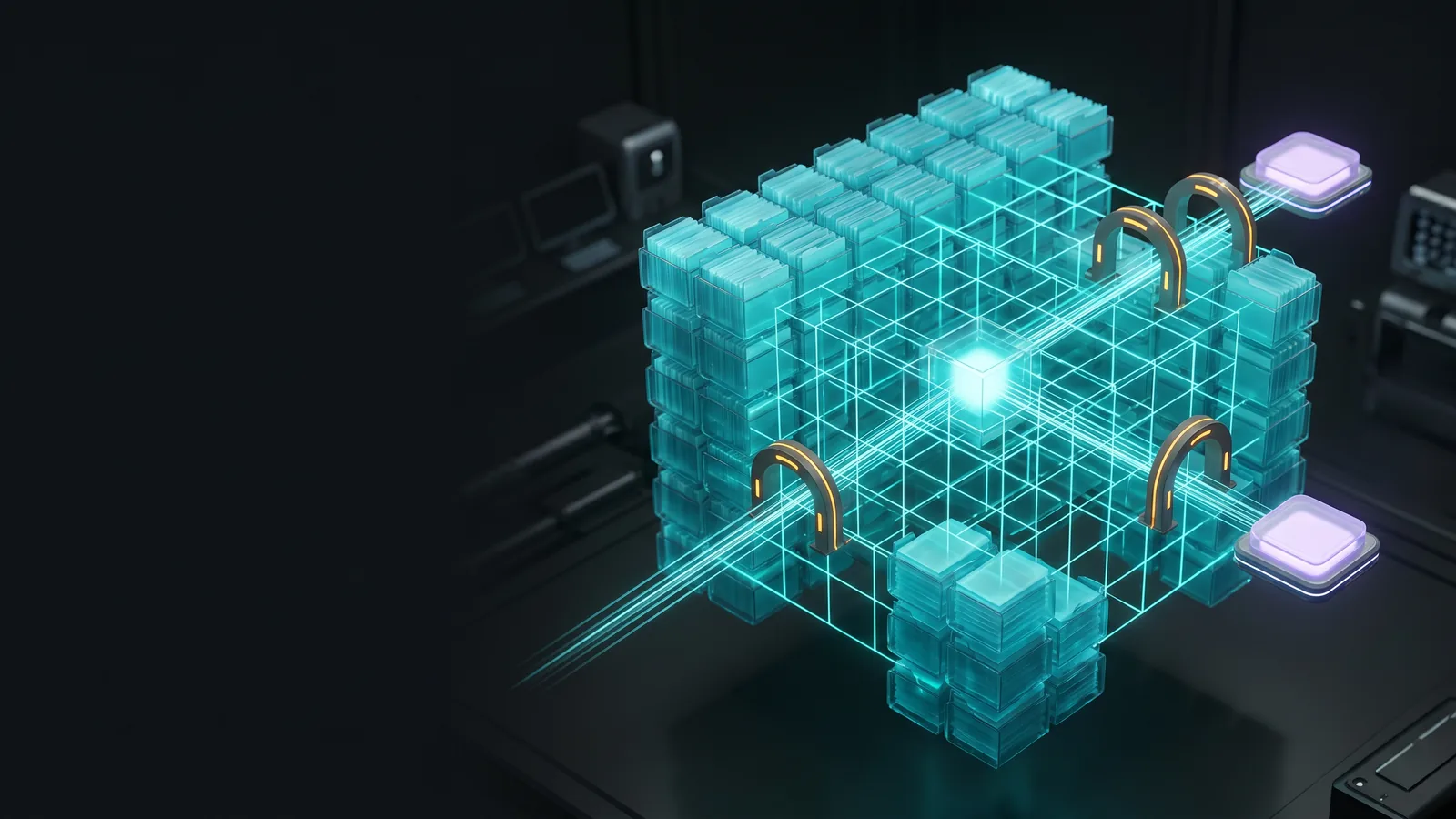
RAG knowledge architecture with document-to-vector retrieval pipeline visualized as layered translucent panels

How DevStudio ships RAG knowledge base

Hangzhou-based, ex-Alibaba senior engineering team. Project rate $14k–$85k over 4–10 weeks. Three engineering commitments written into every contract before any code is shipped.

Commitment 1

Eval Week 1

200+ reference cases with expected outputs and a CI-gated scoring rubric land in the first sprint — before any production code merges. Accuracy is measured from day one.

Commitment 2

6-Month QA Window

Six-month warranty on production fixes. Customer owns source code, deployment docs, and runbook from day one of handover — no vendor lock-in.

Commitment 3

Quarterly Token Audit

Token routing, caching, and model selection re-evaluated every 90 days against the eval set so unit economics stay predictable as traffic grows.

Entry Product — Paid Scoping

$700–$2,800, 1–2 weeks — written go/no-go before any build engagement

A fixed-price feasibility engagement. About one in four scopings recommends not building. Fee credits 100% toward a build engagement if you proceed.

Book a Scoping

RAG Engineering Approach

Our RAG delivery method treats retrieval as a first-class engineering problem, not a prompt-tweaking exercise. We start with the eval set in week one �?at least 200 reference questions with expected answers and citation requirements �?so accuracy is measured from day one. Implementation covers document ingestion, embedding strategy selection, hybrid search (BM25 + vector), reranking, and grounded answer generation with explicit citations. Token routing and caching are tuned in parallel so monthly operating cost stays predictable as the corpus grows. Last updated: 2026-05-27.

Start Your RAG Project

Talk to engineers who have shipped RAG to production.

Project inquiry form. Fields marked with an asterisk are required.

Where this service fits

Retrieval-Augmented Generation is not a single technology; it is a class of architectures that share one property — answers are grounded in retrieved source documents rather than generated from model weights alone. The patterns below are the RAG workloads our buyers ship to production. Each pattern is a specific architecture decision, not a generic 'chatbot on top of PDFs'.

Enterprise — internal knowledge

Internal knowledge base for support, sales, and field engineering

Your internal knowledge lives in Confluence, Notion, Google Drive, SharePoint, support tickets, and Slack — fragmented and stale. We build a unified retrieval layer that pulls from all of these sources, normalizes the chunks, ranks aggressively for recency where it matters (price lists, policy changes) and for canonical answers where it does not (product specs, FAQ). The interface is a search bar plus an answer panel with citations, deployed inside the tools your team already lives in.

Customer-facing support

Customer-facing answer engines with strict citation discipline

Customer-facing RAG is a different beast: a wrong answer is a brand-damage event, not just an internal annoyance. We build with strict citation discipline — every answer cites the source paragraph, the answer is rejected if grounding falls below threshold, and an explicit fall-back path routes the conversation to a human when the model is not confident. This is the only pattern where customer-facing buyers can defend RAG to their support leadership.

Legal and compliance

Legal research and contract review

Legal RAG demands a different evaluation bar: retrieval recall is more important than retrieval precision because missing a relevant case is worse than retrieving an irrelevant one. We build with a higher recall target, secondary reranking on legal-specific signals (jurisdiction, recency, cite-graph weight), and an answer format designed to be reviewed by a senior attorney rather than read as a final answer.

Healthcare

Clinical decision support against medical literature

Clinical RAG is regulated and high-stakes. We work with the buyer's compliance team to scope what the system is and is not allowed to claim, ground every output in peer-reviewed source documents, log every query and response for audit, and build the UX around clinician judgment rather than around a "the AI says..." mental model. The eval set is designed by the clinical advisory board, not by us.

Financial services

Research and reporting against financial filings and reports

Financial RAG works against structured (filings, reports) and semi-structured (research notes, transcripts) data, often across decades of history. We build with deduplication and canonicalization (different filings can say the same fact in different words), with strict point-in-time retrieval (today's question against last quarter's filings should retrieve last quarter's reality), and with explicit numerical extraction so a reported revenue figure is treated as a number, not as a string.

Engineering and DevOps

Code, runbook, and incident-history retrieval

Engineering RAG is its own discipline: chunks are code blocks and runbook steps, ranking weights structural signals (function name, import graph, test coverage), and the answer format is "here is the code change with the runbook step that justifies it". We build this pattern on top of repository indexers that update on every push so the retrieval surface is never older than the codebase.

How we deliver

Every RAG project we ship moves through the same five phases. RAG fails when teams skip directly to 'we have a chatbot' without doing the eval-first discipline that distinguishes a production system from a demo. The phases below are designed to make that mistake impossible.

  1. Eval set construction

    Week 1 — 2

    Before we touch retrieval or generation, we build the eval set: a minimum of 200 reference questions with expected answers and citation requirements, drawn from real questions your users have asked or will ask. This is week-one work because the eval set is the contract — if the system passes the eval set, we ship; if it does not, we keep iterating. Skipping this step is the single biggest predictor of a RAG project that does not survive contact with real users.

  2. Source ingestion and chunking strategy

    Week 2 — 4

    We connect to every source in scope (document stores, ticket systems, code repositories, structured databases) and design the chunking strategy per source. Chunking is not a one-size-fits-all problem: legal documents chunk by clause, code chunks by function, support tickets chunk by message, financial filings chunk by section. The wrong chunking strategy is the second-most-common reason RAG accuracy stays stuck at 70%.

  3. Retrieval architecture and reranking

    Week 4 — 6

    Hybrid retrieval (BM25 + dense vector) is our default; we add reranking with a cross-encoder when the eval set shows the simple retrieval ceiling has been hit. We also add domain-specific signals — recency, cite-graph weight, jurisdiction, document authority — as reranking features when they matter. Each retrieval iteration is measured against the eval set so the gain is real, not vibes.

  4. Grounded generation and citation discipline

    Week 6 — 8

    Generation is wired with explicit grounding: the model is required to cite the source chunk for every factual claim, and the answer is rejected (or routed to a human) if grounding score falls below threshold. Token routing and caching are tuned in this phase so the monthly run rate is predictable as the corpus grows.

  5. Production hardening and operate-with-you

    Week 8 — 12 + ongoing

    Observability dashboards, alerting on retrieval quality drift (not just on uptime), monthly eval rerun, quarterly model upgrade plan, and a written escalation path. RAG systems decay silently if not operated with discipline; we ship the operate-with-you tier explicitly designed to prevent that decay.

Milestones you can hold us to

On a typical 12-week first-RAG engagement, here are the concrete checkpoints. Each milestone has a written deliverable and a measurement against the eval set.

Milestone
Week 2

Eval set v1 with 200+ reference questions

Eval set loaded into the eval harness with expected answers and citation requirements. The harness runs in CI on every change so retrieval and generation regressions surface within minutes.

Milestone
Week 4

Source ingestion live and chunking strategy validated

Every source in scope connected with an automated refresh schedule. Chunking strategy validated against the eval set: a chunking change that breaks the eval set is reverted before it is merged.

Milestone
Week 6

Retrieval baseline meeting target recall

Hybrid retrieval running with measured precision and recall against the eval set. If we have to add reranking or domain-specific signals to clear the target, that decision is made here against data, not later under timeline pressure.

Milestone
Week 8

Generation with citation discipline live in staging

Grounded generation running end-to-end with citation enforcement and grounding-score thresholds. The full eval set runs to completion with a measurable answer-quality score.

Milestone
Week 11

Production hardening and observability complete

Retrieval quality dashboards live, drift alerts wired, cost dashboards tuned, on-call runbook written, monthly eval rerun cadence agreed.

Milestone
Week 12

Production cutover behind feature flag

Traffic moved behind a feature flag with kill switch on the generation surface. Operate-with-you handover begins.

Frequently asked questions

The questions buyers ask after they have seen one or two RAG projects fail to make it past pilot.

What does a RAG project typically cost?
A first production RAG system lands between $30,000 and $150,000 USD depending on source count, document volume, evaluation complexity, and regulatory profile. Subsequent RAG workloads on the same retrieval platform are roughly 30% to 50% of that cost because the ingestion, retrieval, and observability layers are reused. Engagements typically start from $5,000 USD for a discovery and eval-set scoping phase that you keep regardless of whether you continue. We have a longer-form RAG cost guide on the blog covering the $15K to $400K+ range with example budgets.
Why do you build the eval set first instead of last?
Because the eval set is the contract. Without it, "is this RAG system working?" is a vibes question, not an engineering question. With it, we have a number we can drive up week over week, a regression detector that catches when a chunking or model change breaks something, and a defensible answer for the day a senior stakeholder asks how we know the system is correct. Building the eval set first costs two weeks; not building it costs the project.
Can the system handle confidential or regulated data?
Yes. We deploy into your cloud accounts (AWS, GCP, Azure), in the region you specify, with the encryption and access posture your compliance team requires. We work with SOC 2, HIPAA, and regional financial regulations as part of the architecture decision record. For the most sensitive workloads, we deploy with on-premise or VPC-only model serving so no document leaves your perimeter.
Which embedding and generation models do you use?
We pick per workload. Closed-source frontier models (OpenAI, Anthropic, Google) when accuracy is paramount and the buyer is comfortable with the data-handling posture; open-source models (the Llama and Qwen families, Mixtral) when data sovereignty or unit economics demand it. Embedding models are picked the same way — measured against the eval set, not chosen by reputation. Every choice is documented and reviewed quarterly so the system rides the model-quality curve rather than aging into obsolescence.
How do you handle the corpus growing to millions of documents?
Architecture is sized for one order of magnitude beyond current corpus size on day one. Past that, we partition the index, separate hot and cold storage, and add tiered retrieval (a fast first stage followed by a more expensive rerank stage on the top results). Cost per query stays predictable because we track it as a first-class metric with alerting tuned to it.
What happens when a model upgrade breaks our system?
On every model upgrade, we re-run the full eval set on the new model. If accuracy drops, we tune prompts, retrieval, or thresholds until accuracy recovers — and only then cut traffic over. Buyers who skip this step are the ones surprised by silent regressions when a provider ships a new version. This is included in the monthly operate-with-you fee.
How do you compare RAG to fine-tuning?
RAG is the right answer when the underlying knowledge changes (new documents arrive, policy updates, new product launches), when answer correctness must be auditable (citations matter), and when latency budget allows a retrieval round-trip. Fine-tuning is the right answer for style, format, and stable domain knowledge. Most production systems use both: RAG for the facts, fine-tuning or prompting for the voice. We have a longer-form comparison on the blog.
Can we run this entirely on-premise without external APIs?
Yes. We have shipped fully self-hosted RAG systems on customer infrastructure with open-source embeddings and generation models, on-premise vector stores, and on-premise observability. The trade-off is unit economics and the speed of riding the frontier model improvement curve, both of which are explicit in the architecture decision record.