Autonomous Systems

Next-Gen AI Agents for Business

Move beyond static chatbots. We develop sophisticated AI agents that understand context, interact with your existing tools, and execute workflows autonomously.

  • Custom LLM Orchestration
  • Multi-agent Collaboration Systems
  • Tool-Use & Function Calling Capabilities
  • Context-aware Long-term Memory

Engagements typically start from $5,000 USD. Final scope priced after discovery call.

Discuss Your AI Agent
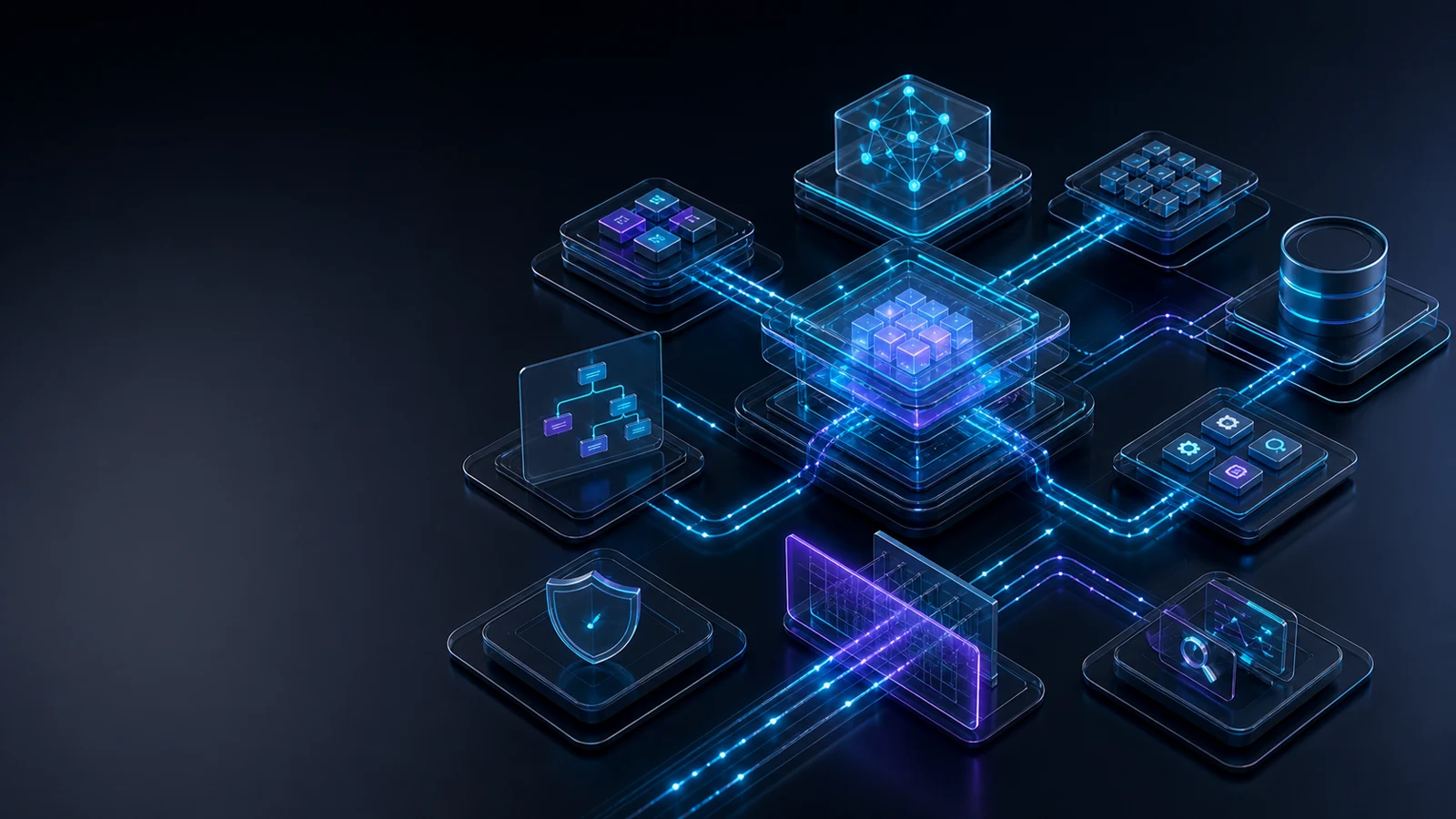
AI agent workflow architecture with connected orchestration layers

How DevStudio ships AI agent

Hangzhou-based, ex-Alibaba senior engineering team. Project rate $14k–$85k over 4–10 weeks. Three engineering commitments written into every contract before any code is shipped.

Commitment 1

Eval Week 1

200+ reference cases with expected outputs and a CI-gated scoring rubric land in the first sprint — before any production code merges. Accuracy is measured from day one.

Commitment 2

6-Month QA Window

Six-month warranty on production fixes. Customer owns source code, deployment docs, and runbook from day one of handover — no vendor lock-in.

Commitment 3

Quarterly Token Audit

Token routing, caching, and model selection re-evaluated every 90 days against the eval set so unit economics stay predictable as traffic grows.

Entry Product — Paid Scoping

$700–$2,800, 1–2 weeks — written go/no-go before any build engagement

A fixed-price feasibility engagement. About one in four scopings recommends not building. Fee credits 100% toward a build engagement if you proceed.

Book a Scoping

Localized AI Development Insights

Our AI Agent development methodology is rooted in the latest advancements in agentic orchestration (e.g., LangGraph, AutoGen). By serving as a bridge between foundational models and enterprise security requirements, we ensure that your AI agents operate within guarded boundaries while maximizing efficiency. Our team provides end-to-end integration across cloud infrastructures, ensuring low latency and high availability for your intelligent workforce. Last updated: 2026-05-19.

Start Your AI Journey

Transform your operations with intelligent agents.

Project inquiry form. Fields marked with an asterisk are required.

Where this service fits

AI agents are not a single product category. The shape of the agent — how autonomous it is, which tools it touches, what guardrails it needs — depends entirely on the workflow you are trying to compress. Below are the patterns where our buyers see the strongest payback within the first two quarters of operation, and what production looks like in each of those scenarios.

B2B SaaS — Series A to Series C

Customer support copilots that resolve tier-one tickets autonomously

Support volume scales linearly with revenue, but headcount cannot. We build agents that read your existing knowledge base, your past tickets, your product telemetry, and a curated set of tools (refund, reissue invoice, reset password, reschedule shipment) so the agent can resolve the bottom 40% to 60% of tickets end-to-end without human handoff. Tier-two and edge-case tickets are routed to humans with a structured summary and recommended action so first-response time drops below 30 seconds while resolution quality stays consistent.

Operations — RevOps, FinOps, IT

Internal ops agents that compress cross-system workflows

Operations teams burn most of their cycles moving information between Salesforce, NetSuite, Jira, Slack, and a long tail of spreadsheets. We build agents that own a specific recurring workflow end-to-end — quote-to-cash exception handling, employee onboarding, vendor onboarding, monthly close pre-flight checks — and execute the workflow against the underlying systems with full audit trails. Each agent is scoped to a single ROI-bearing workflow rather than a generic "do anything" assistant, which is what keeps reliability above 95%.

E-commerce — DTC and marketplace sellers

Merchandising and listing agents that move at catalog speed

Listing 2,000 SKUs across Amazon, Shopify, TikTok Shop, and Walmart with hand-tuned titles, attributes, and category mapping is a six-week project for a human team. An agent reads the master product database, applies channel-specific listing rules, generates compliant copy, picks the correct category leaf node, and queues images through your visual pipeline — turning the same project into 48 hours with a human reviewer in the loop for ambiguous cases only.

Knowledge-heavy professional services

Research and drafting agents for legal, consulting, and accounting

Junior associates spend 30% to 50% of their week on first-pass research, summary memos, and document comparison work. We build agents that pull from your firm's document corpus and approved external sources, produce drafts with citation tracking, flag novel issues for human review, and route everything through your existing review workflow. The agent never replaces the senior reviewer — it removes the first 70% of mechanical work so the reviewer spends time on judgment, not retrieval.

Healthcare and regulated industries

Claims, coding, and compliance triage agents inside guardrails

Regulated workflows have hard rules, audit requirements, and a low tolerance for hallucination. We build agents that operate inside an explicit policy layer: every action is checked against a deterministic ruleset before execution, every model output is grounded in retrieved source documents with citations, and every decision is logged with the full prompt, retrieved context, and tool calls. This is the only pattern where regulated buyers can defend agent decisions to a regulator or external auditor.

Sales — outbound and pipeline ops

Sales research and personalization agents that fill the top of funnel

BDRs spend the majority of their day on research and personalization, not on conversations. An agent that reads your ICP definition, scrapes the prospect surface (website, LinkedIn, recent news, product launches, hiring signals), and drafts a personalized first-touch email turns one BDR into the equivalent output of three. The human stays in the loop to approve before send, which keeps deliverability and brand voice intact.
How we deliver

Every AI agent project we ship moves through the same five phases. The phases are sequential because each one de-risks the next: skipping discovery means building the wrong agent, skipping evaluation means shipping an agent you cannot defend in production. Total elapsed time is typically 8 to 14 weeks for a first agent, with subsequent agents on the same platform shipping in 3 to 5 weeks because the platform layer is reused.

  1. Discovery and workflow mapping

    Week 1 — 2

    We sit with your operators and shadow the workflow the agent will own. The output is a written workflow specification: which tools the agent must touch, which decisions are deterministic vs. judgment-based, what failure modes the human reviewer will accept, and what the success metric is. Discovery is the cheapest place to find out the workflow you described in the kickoff is not actually the workflow your team runs every day.

  2. Eval set construction

    Week 2 — 3

    Before we write agent code, we build the eval set. A minimum of 200 reference tasks with expected outputs, expected tool calls, and expected failure modes — drawn from your real historical workflow logs. The eval set is the contract: if the agent passes the eval set we ship, if it does not we keep iterating. Building the eval set first is what separates a production agent from a demo.

  3. Agent architecture and tool integration

    Week 3 — 7

    We design the orchestration layer (LangGraph, custom state machine, or a managed framework depending on the workflow), wire each tool the agent will call, build the retrieval layer for grounded knowledge, and add the guardrail layer that checks every action before execution. This is where most of the engineering effort lands. The deliverable at the end of this phase is an agent that runs against the eval set on a developer machine, end-to-end.

  4. Evaluation, hardening, and supervised pilot

    Week 7 — 11

    The agent runs against the full eval set, then against a shadow traffic stream from your real workflow with a human reviewing every decision. We tune retrieval, prompts, tool descriptions, and guardrails until the eval pass rate clears your defined production threshold (typically 90% to 95% depending on the cost of an error). Hardening also covers cost: token routing, caching, and prompt compression are tuned here so monthly run-rate is predictable from day one.

  5. Production launch and operate-with-you

    Week 11 — 14 + ongoing

    Cutover to production traffic happens behind a feature flag with a kill switch on every tool call. We stay attached for the first six weeks of production to triage real-world edge cases, then transition to a monthly operate-with-you cadence: eval set rerun on every model upgrade, monthly cost and accuracy review, quarterly platform-layer upgrades. Your team owns the agent from week 14 — we own keeping it healthy if you want us to.

Milestones you can hold us to

These are the concrete checkpoints we hit on a typical 14-week first-agent engagement. Every milestone has a written deliverable and a demo, so you always know exactly where the project stands without having to ask.

Milestone
Week 2

Workflow specification signed off

A written, diagrammed workflow spec covering tool surface, decision types, failure-mode tolerance, success metric, and out-of-scope boundaries. This document is what the rest of the engagement is measured against.

Milestone
Week 3

Eval set v1 ready

Minimum 200 reference tasks loaded into our eval harness with expected outputs and expected tool calls. The eval harness runs in CI on every change so regressions surface within minutes, not weeks.

Milestone
Week 5

Tool integration and retrieval layer working end-to-end

Each tool the agent must call is wired with auth, retries, idempotency, and error handling. The retrieval layer (vector store + reranker) returns grounded context with citations on every query.

Milestone
Week 7

Agent v1 passes eval set on developer machine

The agent completes the full eval set end-to-end with a measurable pass rate. We publish that pass rate and the failure breakdown so the gap to production threshold is explicit.

Milestone
Week 10

Shadow traffic pilot under human review

The agent runs against real workflow traffic with a human reviewer rating every decision. We collect the disagreements as new eval cases, tune the agent, and re-run until production threshold is cleared.

Milestone
Week 14

Production cutover with kill switch and runbook

Traffic is moved behind a feature flag with per-tool kill switches, full observability dashboards, on-call runbook, and a written rollback plan. Your team owns the agent from this point with us on operate-with-you support.

Frequently asked questions

These are the questions every serious buyer asks in the first call. Short answers below; we go deeper on any of these on the discovery call.

What does an AI agent project typically cost?
A first production agent on a new workflow lands between $40,000 and $120,000 USD depending on the number of tools the agent must integrate, the regulatory profile of the workflow, and whether your eval data is already collected. Subsequent agents on the same platform layer are roughly 30% to 50% of that cost because the orchestration, observability, and guardrail layers are reused. Engagements typically start from $5,000 USD for a discovery and workflow specification phase that you keep regardless of whether you continue with us.
How long until we see results in production?
For a clean first-agent project on a well-scoped workflow with available eval data, real production traffic is typically running by week 12 to week 14. The first measurable business result — tickets resolved, hours saved, listings shipped — usually shows up within four weeks of cutover once the workflow stabilizes.
Do you build with LangGraph, AutoGen, CrewAI, or a custom stack?
We pick the orchestration layer per workflow. LangGraph is our default for stateful, branching workflows because the state machine is auditable. We use lighter custom orchestration when the workflow is mostly linear with a small number of tools. We avoid over-frameworked stacks where the framework abstraction is heavier than the workflow it is modeling. The choice is documented in the workflow specification so it is reviewable, not magical.
Who owns the code and the IP?
You do, fully. All code, prompts, eval sets, and infrastructure-as-code is delivered into your GitHub organization and your cloud accounts. We sign mutual NDA on day one and a work-for-hire agreement at engagement start. There are no vendor lock-in layers: you can replace us at any milestone and continue from where we left off.
How do you prevent hallucination and unsafe actions?
Three layers. First, retrieval grounding — the agent cites the source document for every factual claim, and the eval set checks citation correctness, not just answer correctness. Second, deterministic guardrails — every tool call is checked against a policy ruleset before execution (no irreversible action without human approval, no action outside the agent's declared tool surface). Third, full observability — every prompt, retrieved context, tool call, and model response is logged so any unsafe behavior is reproducible after the fact.
What happens when the underlying model gets upgraded?
On every model upgrade we re-run the full eval set on the new model. If pass rate drops, we tune prompts and retrieval until it recovers, and only then cut traffic over. This is included in the monthly operate-with-you fee. Buyers who skip this step are the ones who get surprised by silent regressions when a provider ships a new model version.
Can the agent handle multilingual workflows?
Yes. Most modern foundation models handle English plus the major European and East Asian languages well out of the box. The eval set must include reference tasks in each target language so quality is measured per language, not assumed. Long-tail languages (e.g. less-resourced African or Southeast Asian languages) require additional retrieval and evaluation work and are scoped explicitly in the workflow specification.
Do you sign a service-level agreement?
Yes. Production agents ship with a defined uptime SLA on the orchestration layer (typically 99.5% to 99.9% depending on infrastructure choice), an accuracy SLO based on the eval set pass rate, and a defined incident response time. SLA tier and pricing are agreed before launch and reviewed quarterly against real production data.